

Building over and down the natural slope of the land enabled us to situate the pool on a lower terrace out back and thus preserve that newly visible panorama. A pond at the base of the slope, also previously invisible from the house, was doubled in size (by this time the Atties had purchased an adjacent four-and-a-half acre plot, so they now owned about 12 acres all together). The pond now disappears behind a small peninsula and gives the illusion that it keeps on going, that it’s not a finite body of water.

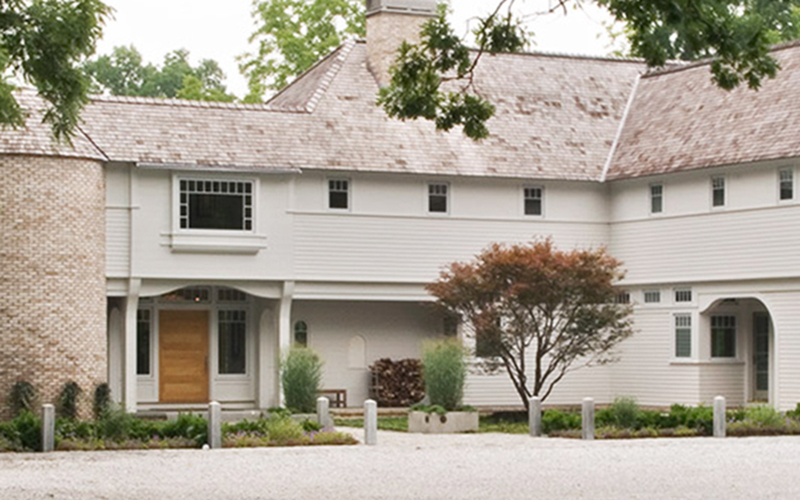
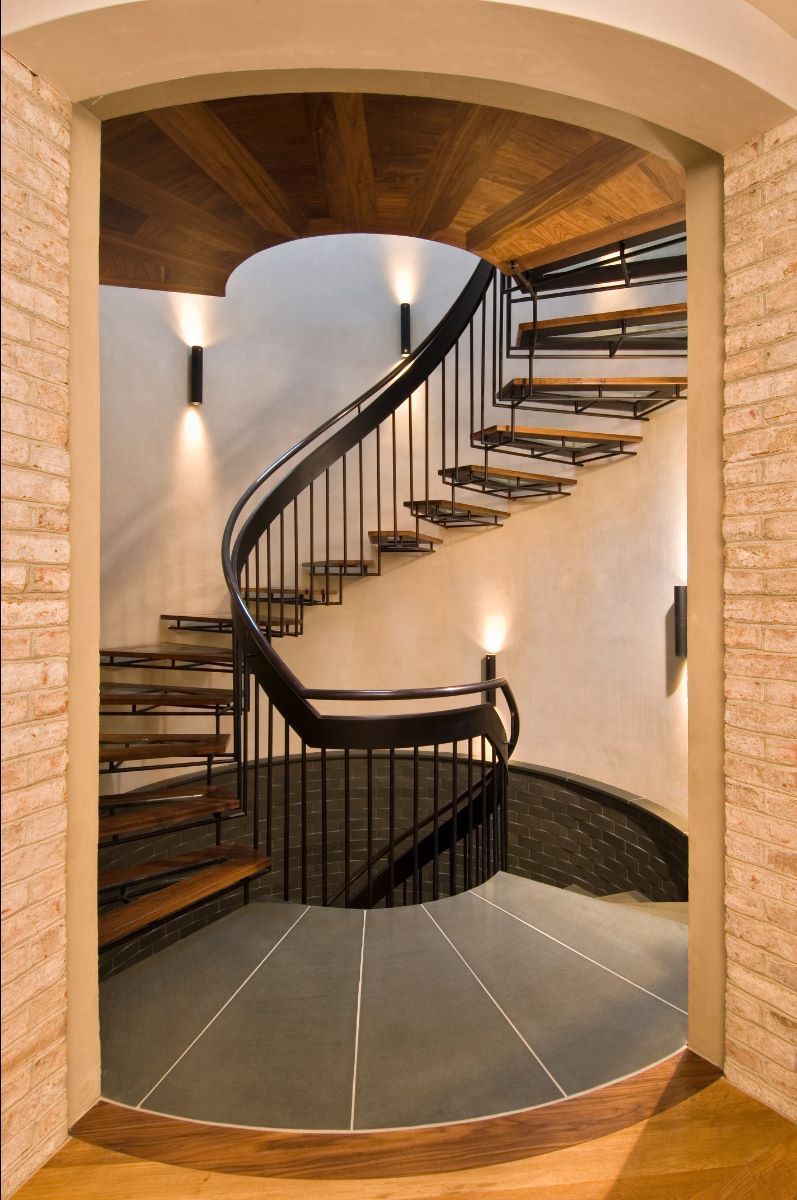
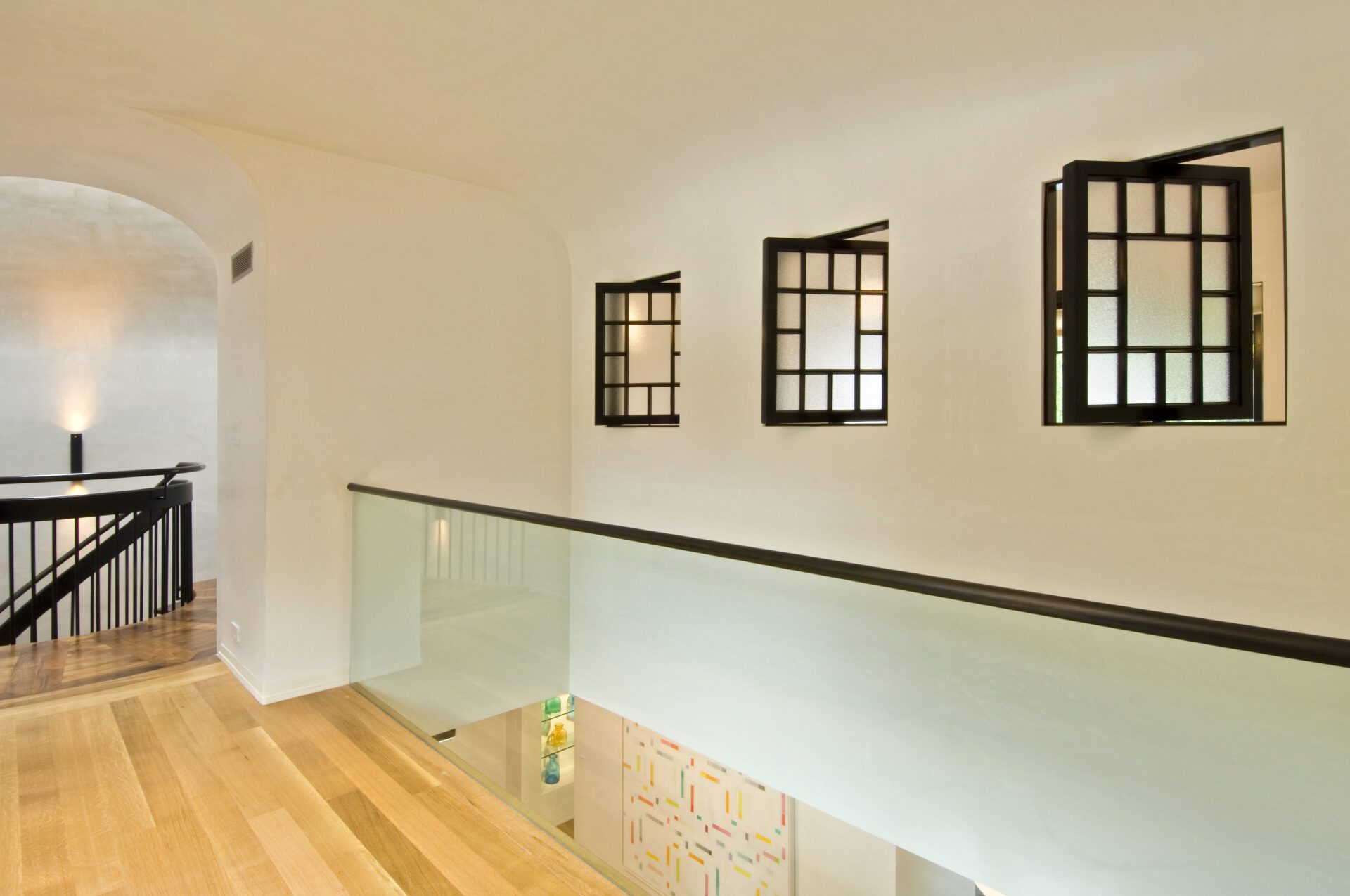
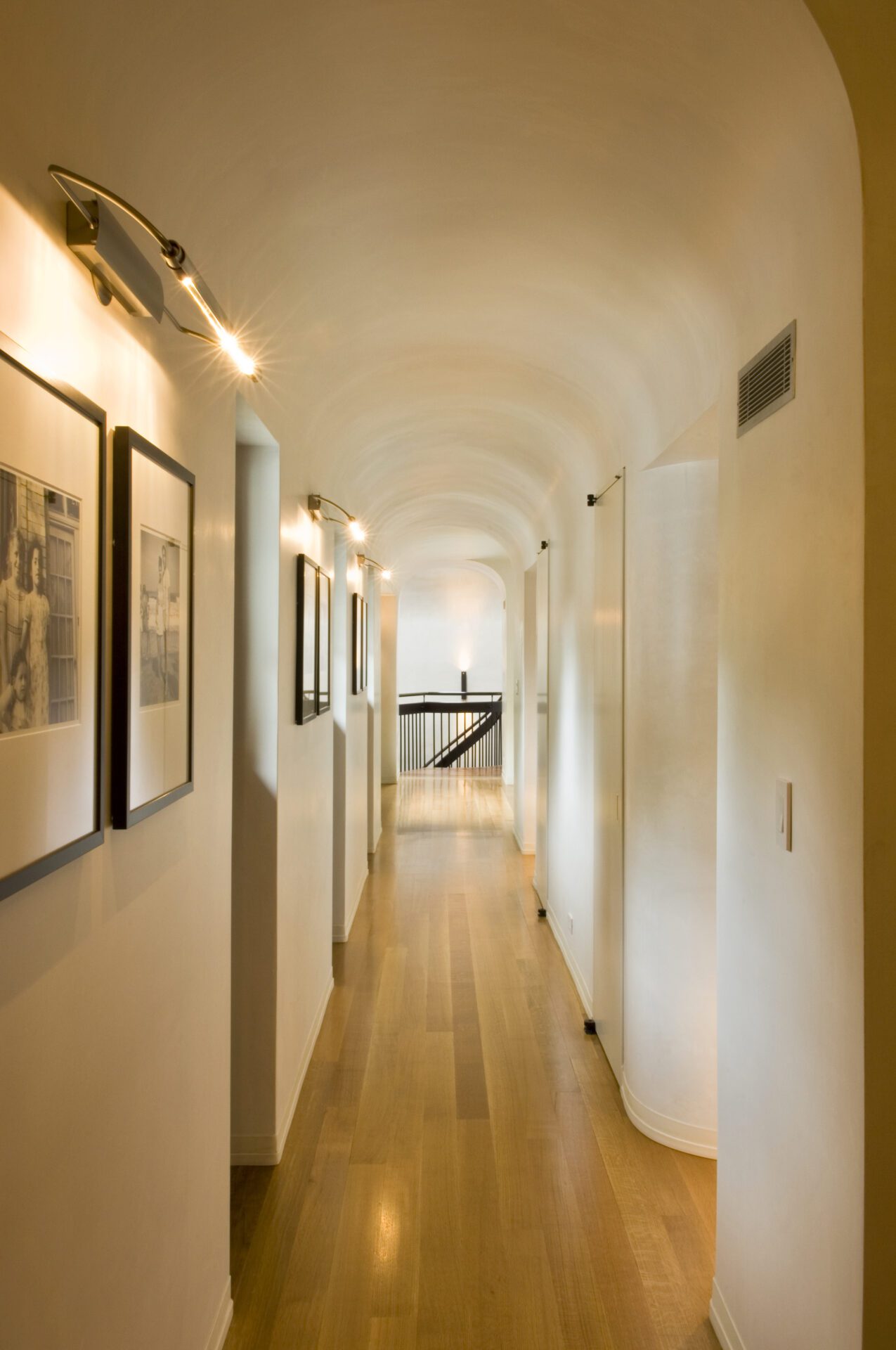
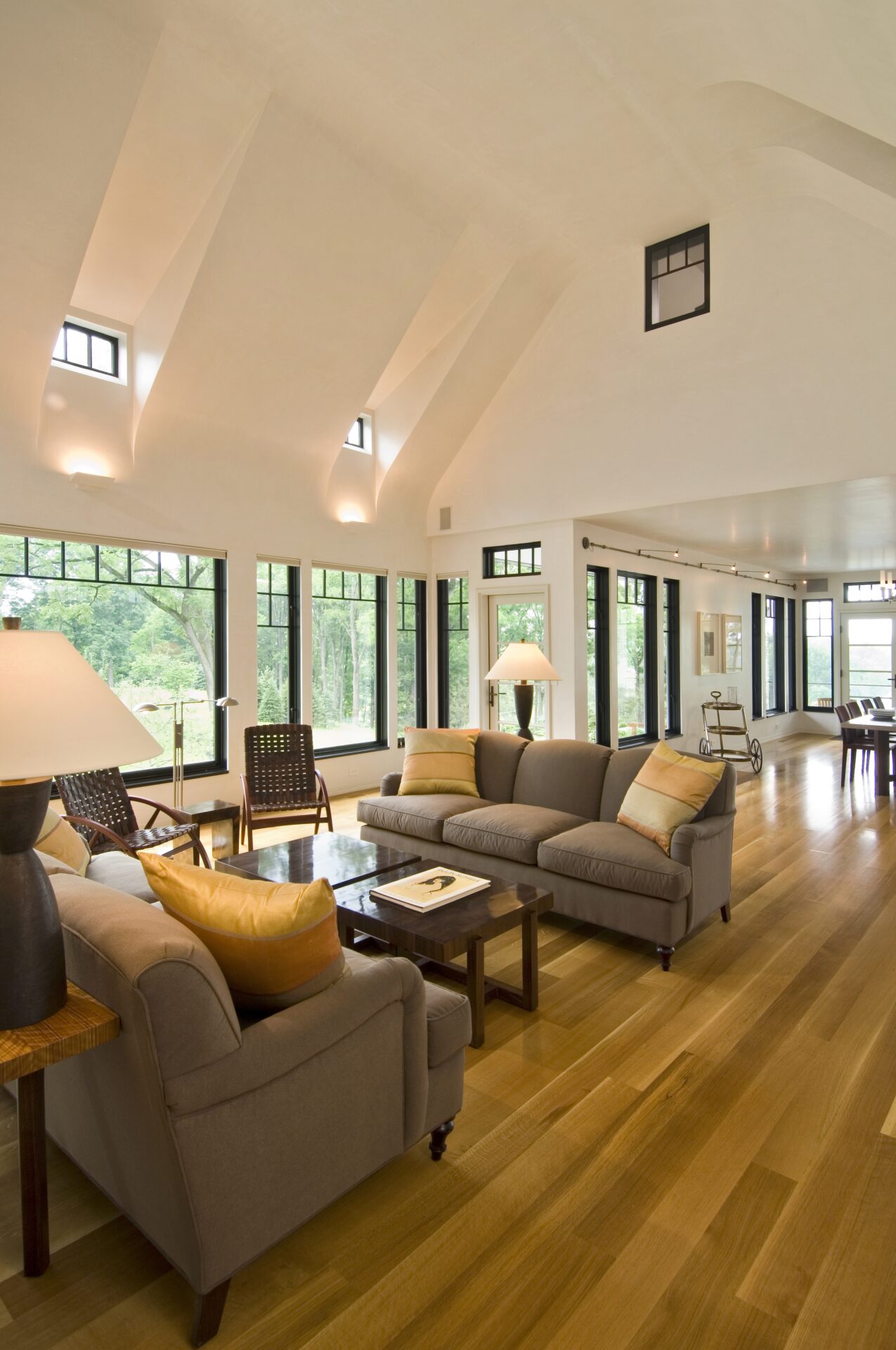
The spiral stair runs through the silo-like tower, its wood-framed glass treads allowing sunlight to penetrate the stairwell. Windows cut into the wall of the upper hallway (top) also bring in light. Smooth vaulted ceilings in the hallways (below) and living room (opposite), recall medieval abbeys. The plaster was left unpainted to show texture and high-quality workmanship.
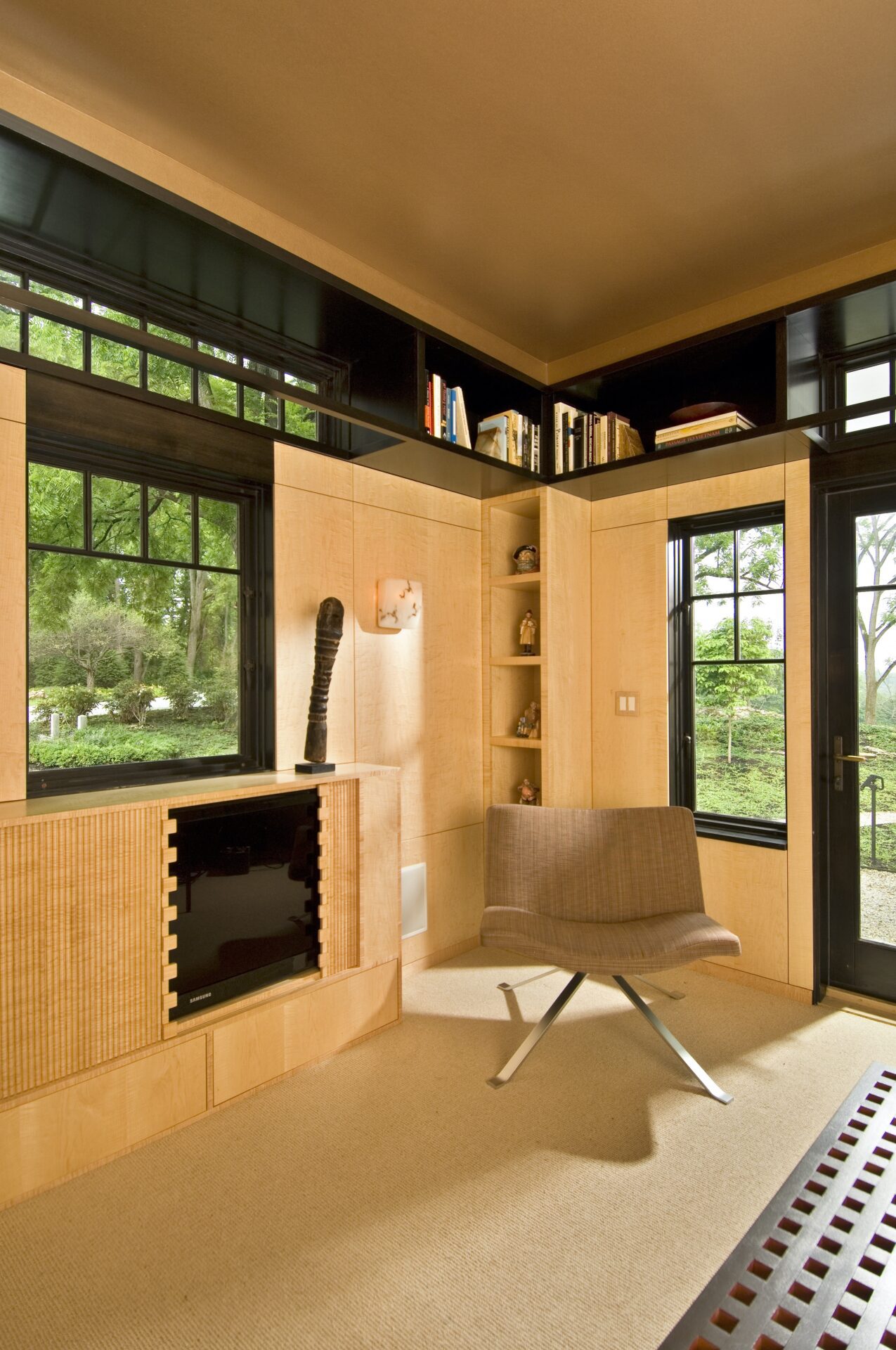
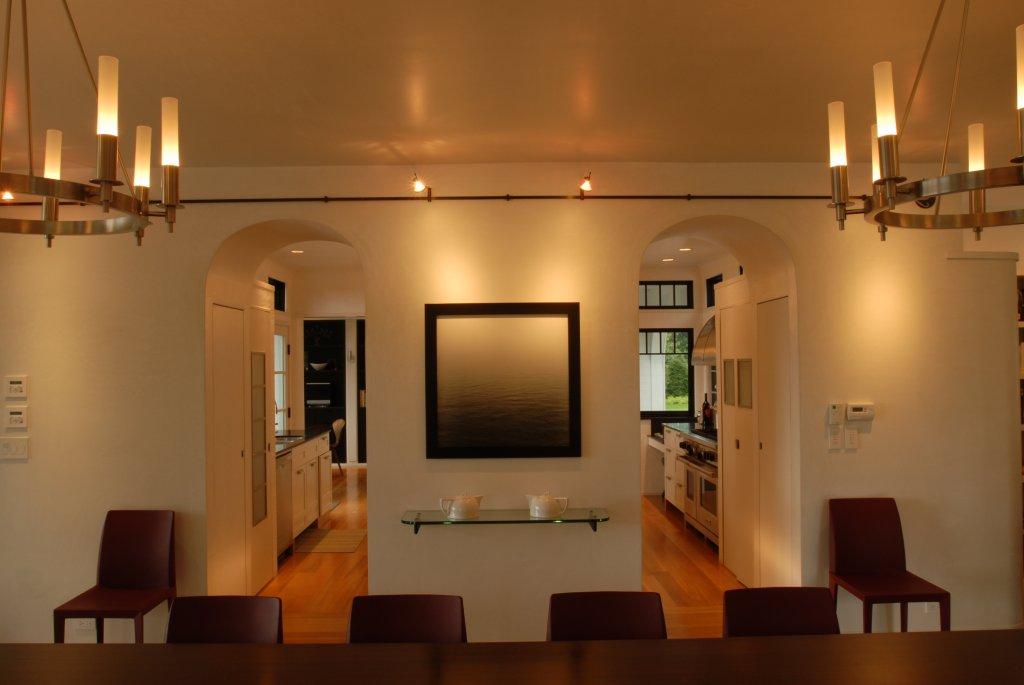
Throughout, there are decks and terraces. There is also a detached barn, which serves as a studio and additional guest quarters. Three years after they tore down their original purchase, the family has the perfect place to indulge in both privacy and the community of family. They can all sit around the enormous walnut-and-steel dining table custom handcrafted by woodworker Eric Englander, who made several other pieces of furniture in the house. But with all the levels and terraces, large rooms and small rooms, there are plenty of places to avoid the fray when everyone is in residence.